Waterfalls in Hawaii: The Complete Island-by-Island Guide
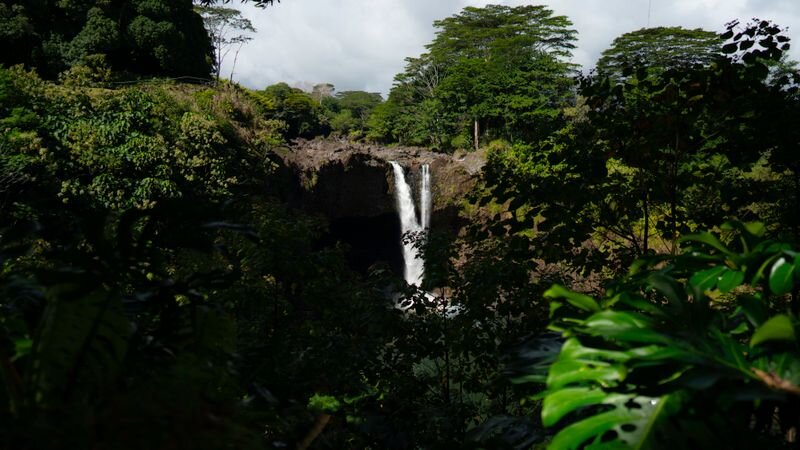
Hawaii's waterfalls are as varied as its geology. The Big Island has a 442-foot plunge on the Hamakua Coast and a valley waterfall so tall — over 1,400 feet — that its flow has been diverted by a dam to irrigate sugarcane. Maui's Road to Hana corridor hides a 400-foot cascade at the end of a bamboo forest trail. Kauai has a waterfall famous enough to be the opening shot of a 1970s television series and, deep inside the Na Pali wilderness, a falls accessible only after an 8-mile round-trip hike. Oahu has a quiet jungle waterfall 30 minutes from Waikiki. This guide covers every major waterfall in Hawaii by island — heights where verified, trail details, and the safety realities that tourist brochures leave out.
Quick Reference: Hawaii's Major Waterfalls
| Waterfall | Island | Height | Access | Notes |
|---|---|---|---|---|
| Akaka Falls | Big Island | 442 ft | 0.4-mi paved loop | No swimming; fee |
| Rainbow Falls | Big Island | 80 ft | Short walk, free | Best at 10am |
| Hiʻilawe Falls | Big Island | ~1,450 ft (reduced flow) | Waipiʻo Valley | Can be dry; private land |
| Waimoku Falls | Maui | 400 ft | Pipiwai Trail, 4 mi RT | NP entry fee |
| Twin Falls | Maui | ~20–60 ft | Short hike from Hana Hwy | Swimmable pools |
| Wailua Falls (Kauai) | Kauai | ~80–173 ft (disputed) | Drive-up viewpoint | Fantasy Island filming site |
| Opaekaa Falls | Kauai | ~150 ft | Roadside pullout, free | Best in morning light |
| Hanakapiai Falls | Kauai | ~300+ ft | 8 mi RT hike (Na Pali) | Strenuous; seasonal closures |
| Manoa Falls | Oahu | ~150 ft | 1.6 mi RT, moderate | Flash flood risk |
| Waimea Valley Falls | Oahu | ~45 ft | 0.75 mi paved path (paid entry) | Swimmable with life jacket |
Safety first: Flash floods are the primary danger at Hawaii waterfall trails. Rain falling miles uphill can send a wall of water down a gorge in minutes with no local warning. Never wade in streams during or after heavy rain. Leptospirosis — a bacterial infection from freshwater contaminated by animal waste — is present in Hawaii's streams; avoid swallowing stream water and cover any open cuts. Heed all posted closure signs without exception.
Big Island Waterfalls
Akaka Falls — 442 Feet, Hamakua Coast
Akaka Falls is the Big Island's most accessible major waterfall and one of the most impressive in Hawaii. A 0.4-mile paved loop trail descends through tree ferns and giant ginger, passes the smaller Kahuna Falls (100 ft), and arrives at a platform overlooking Akaka's 442-foot unbroken plunge into a pool surrounded by jungle walls. The viewing platform is as close as visitors get — no swimming, no trail to the base. The loop takes about 20–30 minutes. Admission is charged; check dlnr.hawaii.gov/dsp for current fees. Located in the Hamakua Coast town of Honomu, about 11 miles north of Hilo. See the Akaka Falls guide for the full story on the Hamakua geology and history.
Rainbow Falls — 80 Feet, Hilo
Rainbow Falls (Waiānuenue — "rainbow water" in Hawaiian) sits in the middle of Hilo, a five-minute drive from downtown, and is completely free to visit. The 80-foot falls drop over a natural lava cave — the mythological home of Hina, the goddess of the moon — into a wide turquoise pool below. Rainbow Falls earns its name: on sunny mornings around 9–10 a.m., the mist below the falls splits sunlight into rainbows reliably enough that you can plan around it. The short viewing walk takes about five minutes. No fee, no reservation, no serious hike required. A natural pairing with Akaka Falls and a Hilo day trip.
Hiʻilawe Falls — Waipiʻo Valley
Hiʻilawe Falls is among the tallest waterfalls in Hawaii with a total drop cited around 1,450 feet and a main free fall of approximately 1,200 feet. It sits at the back of sacred Waipiʻo Valley — the "Valley of the Kings" — on the Big Island's northeast coast. The waterfall is dramatic in appearance but has an important caveat: a dam built in 1989 on the Lalakea Stream above the falls diverts most of its flow for irrigation. The falls can be nearly dry during dry periods, especially outside of the wet season. The valley floor is on private land, and access to the base of the falls requires crossing private property — respect posted boundaries. The best view of Hiʻilawe is from the air; helicopter tours over the Kohala coast frequently include Waipiʻo Valley flyovers. From the Waipiʻo Valley Overlook at the valley rim, you can see the falls in the distance.
Maui Waterfalls
Maui's waterfall landscape is concentrated on the eastern and north-facing slopes — the wet side of the island where tradewind rain feeds hundreds of streams. Most of Maui's best waterfalls are along or near the Road to Hana, the 64-mile highway that winds around the island's eastern coastline.
Waimoku Falls — 400 Feet, Kipahulu
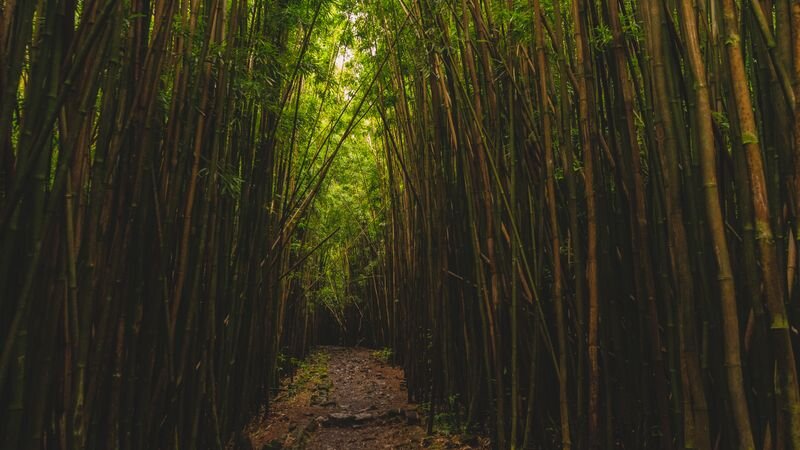
The most dramatic waterfall on Maui sits at the end of the Pipiwai Trail in the Kipahulu section of Haleakalā National Park. Waimoku Falls drops approximately 400 feet down a sheer basalt cliff into a misty pool. The trail to reach it is 4 miles round-trip, moderate in difficulty, with about 650 feet of elevation gain. Along the way it passes the 200-foot Makahiku Falls overlook and then enters a bamboo forest so dense that the sky disappears overhead. Allow 2.5–3 hours. Admission is included with your Haleakalā NP entry fee. The trailhead is at the Kipahulu Visitor Center on the far side of the Road to Hana. Swimming at the base is not recommended — the rock face regularly sheds debris, and the pool can flood rapidly.
Twin Falls — Road to Hana Mile Marker 2
Twin Falls is the first significant waterfall stop on the Road to Hana — a short, easy walk from the highway shoulder leads to accessible pools below a series of cascades. The falls themselves are modest in height but the pools are swimmable, the setting lush, and the access easy enough for most visitors. A fruit stand at the trailhead sells local produce. Twin Falls is an excellent introduction to the Road to Hana waterfall experience. Check water clarity before swimming; flash flood risk applies as with all stream-fed pools.
Note: Wailua Falls on Maui (not to be confused with Wailua Falls on Kauai) is a separate roadside falls along the Road to Hana, roughly at mile marker 45, where the highway crosses the Wailua Stream. It's visible from the bridge and roadside. The two Wailua Falls are unrelated waterfalls on different islands that share the same name — see the FAQ below for disambiguation.
Kauai Waterfalls
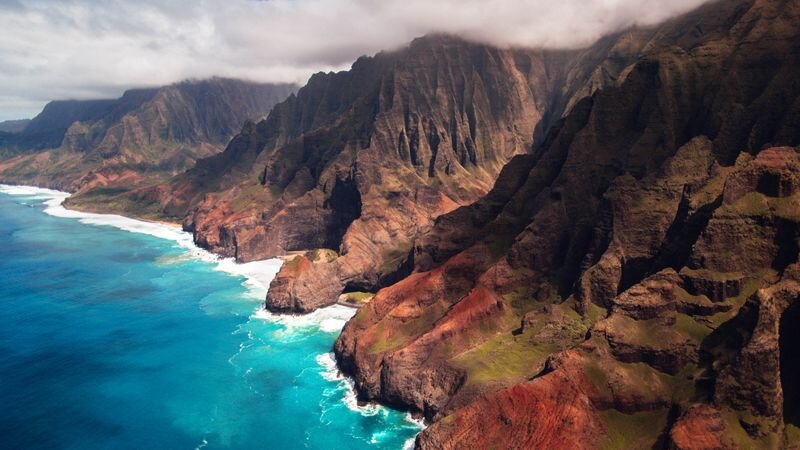
Kauai is the wettest of the major Hawaiian islands — Mount Waialeale at the island's center receives roughly 450 inches of rain annually, making it one of the wettest places on Earth. The result is a network of streams and falls that run year-round. Kauai's interior is also largely inaccessible by road, which means some of its most spectacular waterfalls are visible only from the air. See Waimea Canyon for Waipoo Falls inside the canyon, and Nā Pali Coast for the sea-facing falls of the north shore.
Wailua Falls — Near Lihue
Wailua Falls on Kauai is one of the most easily accessible and most photographed waterfalls in Hawaii. Located a few miles north of Lihue in Wailua River State Park, the falls are a drive-up viewpoint — park on the road and walk 20 steps to the overlook. The falls are a two-drop plunge: official measurements cite around 80 feet, though other sources list closer to 173 feet. The Kauai Wailua Falls became nationally famous as the opening shot of the television series Fantasy Island, which used it throughout its original run. The view from the roadside overlook is excellent. Hiking down to the base is technically possible but on an unofficial, unofficial-and-muddy path — the viewpoint is the intended visit.
Opaekaa Falls — Wailua River Area
Opaekaa Falls is another roadside waterfall near Lihue, visible from a pullout on Kuamo'o Road in the Wailua River area. The falls drop approximately 150 feet in a wide, multi-segmented cascade over basalt. No hiking required — the viewpoint is at a paved pullout. Morning light hits the falls best. Often combined with the Wailua Falls drive and a Kauai day trip.
Hanakapiai Falls — Nā Pali Coast
The most remote major waterfall accessible by trail on Kauai, Hanakapiai Falls sits in the sea cliff interior of the Nā Pali Coast State Wilderness Park. Reaching it requires hiking the Kalalau Trail: 2 miles from the Ke'e Beach trailhead to Hanakapiai Beach (strenuous, significant elevation change), then a separate 4-mile round-trip up a stream valley to the falls. The total round trip from the trailhead is approximately 8 miles and is considered one of the most demanding day hikes in Hawaii. The falls are dramatic — dropping several hundred feet in multiple tiers into a pool — but the pool is not safe for swimming due to falling rocks and flash flood risk. Trail conditions vary; check with the Na Pali Coast State Wilderness Park authorities before going. For context on the Na Pali landscape, see Nā Pali Coast: Kauai's Unreachable Shore.
Kauai helicopter tip: Mount Waialeale's interior crater is the source of dozens of waterfalls visible only by air — they've been described as a "wall of weeping waterfalls." A helicopter tour over Kauai's interior is the only way to see them. See the Hawaii helicopter tours guide for Kauai-specific options.
Oahu Waterfalls
Manoa Falls — Honolulu
Manoa Falls is the most accessible significant waterfall on Oahu, about 30 minutes from Waikiki by car. The trail is 1.6 miles round-trip through dense rainforest — bamboo, ginger, ferns — gaining about 650 feet to a viewpoint at the base of a roughly 150-foot cascade. The falls themselves are dramatic; the pool is closed to swimming due to flash flood risk and leptospirosis. The trail is frequently muddy. Flash flooding is a serious concern in Manoa Valley — check the weather forecast before going and leave immediately if rain begins. An admission fee is charged at the trailhead parking area.
Waimea Valley Falls — North Shore
Waimea Valley on Oahu's North Shore is a 1,875-acre botanical garden ending at a 45-foot waterfall with a swimming pool at the base. Unlike most Hawaii waterfall pools, this one has lifeguards and is actively managed — life jackets are required for all swimmers and provided free. The 0.75-mile paved path through the botanical gardens makes it one of the most accessible waterfall hikes in Hawaii. Admission is charged ($26 per adult as of this writing — confirm current pricing). Call ahead to check if the swimming pool is open; lifeguards make the call each morning based on conditions (water quality, currents, weather).
See Hawaii's Waterfalls From Above
Helicopter tours reveal waterfalls with no trail access — including the famous "weeping wall" of Waialeale on Kauai and the remote Waipiʻo Valley falls on the Big Island.
Browse Waterfall Tours →When to Go and What to Expect
Hawaii's rainy season (roughly November through March) means higher waterfall flows but also more frequent trail closures and flash flood risk. The dry season (May through September) has more reliable hiking conditions but some falls — particularly Hiʻilawe — can be significantly reduced. The ideal window for most waterfall hikes is the shoulder months of April and October, when flows are strong and trail conditions are more predictable.
For waterfall hikes, bring: hiking shoes with grip (trails are muddy), rain gear (even on sunny days, the forest is wet), a dry bag for electronics, and insect repellent. Start early — afternoon rain is common on the windward side, and crowds at popular spots like Twin Falls build through the morning.
Frequently Asked Questions
What is the tallest waterfall in Hawaii?
Hiʻilawe Falls in Waipiʻo Valley has a total drop of around 1,450 feet and a main free fall of roughly 1,200 feet, making it among the tallest accessible waterfalls in Hawaii. However, its flow has been heavily reduced since a 1989 dam diverted the stream above it for irrigation, and the falls can be nearly dry in drought periods. Extremely remote sea-cliff waterfalls on Molokai's north coast are taller but inaccessible by trail.
Which island has the best waterfalls?
The Big Island and Maui both have outstanding options. The Big Island has Akaka Falls (442 ft, easy access) and the historic Hiʻilawe. Maui's Pipiwai Trail to Waimoku Falls (400 ft) through bamboo forest is one of the best hike-to-a-waterfall experiences in Hawaii. Kauai's interior has the most dramatic aerial waterfall landscapes.
Can you swim at Hawaii's waterfalls?
Sometimes. Waimea Valley on Oahu has a staffed pool with lifeguards and required life jackets. Twin Falls on Maui has accessible pools. Swimming directly under most waterfalls carries leptospirosis risk, and Oheo Gulch swimming is currently prohibited. Check signage and never swim in streams after heavy rain.
Is Wailua Falls on Kauai or Maui?
Both — there are two unrelated Wailua Falls on different islands. The Kauai Wailua Falls (near Lihue, Fantasy Island fame) is a drive-up roadside viewpoint. The Maui Wailua Falls is a separate falls along the Road to Hana at roughly mile marker 45.
Do I need a reservation to see Hawaii waterfalls?
Waianapanapa State Park (Maui) requires advance reservations for non-resident visitors. Waimoku Falls requires Haleakalā NP entry. Rainbow Falls, Akaka Falls, and Manoa Falls currently do not require reservations. Check park authority websites before visiting as policies change.
What is the flash flood risk at Hawaii waterfall trails?
High, particularly in stream valleys like Manoa (Oahu) and the Kipahulu area (Maui). Rain upstream can send a wall of water down a gorge with no local warning. Never wade in streams during or after heavy rain. Heed all closure signs immediately.
How hard is the hike to Waimoku Falls?
The Pipiwai Trail is 4 miles round-trip, rated moderate, with about 650 feet of elevation gain. Allow 2.5–3 hours. The trailhead is at the Kipahulu Visitor Center in the Haleakalā NP Kipahulu section.
Can you see Hawaii waterfalls by helicopter?
Yes — helicopter tours are the best way to see Kauai's interior waterfalls (including Waialeale's "weeping wall") and Waipiʻo Valley's Hiʻilawe from above. See the helicopter tours guide for island-by-island options.