14 Things to Do in Hilo, Big Island Hawaii (2026)
Hilo is the other Big Island. While Kona gets the sunshine, the resorts, and the tourist infrastructure, Hilo gets the rain — 130 inches a year — and everything that comes with it: waterfalls, rainforests, botanical gardens, and a lush green landscape that looks nothing like the lava fields on the Kona side. It's also the closest town to Hawaii Volcanoes National Park, home to the best farmers market in the state, and the most authentically Hawaiian town you'll find on any of the major islands.
Hilo isn't polished. That's the point. Here's what's worth doing.
Rain strategy: Mornings in Hilo are often clear and sunny. Rain typically moves in by mid-afternoon. Plan outdoor activities — waterfalls, gardens, beaches — for the morning, and save indoor stops (museum, market, downtown) for the afternoon. A light rain jacket is essential gear, not optional.
1. Hawaii Volcanoes National Park
The Big Island's must-do. Volcanoes National Park is about 45 minutes from Hilo, and it's the main reason to stay on this side of the island. Kilauea has erupted repeatedly in recent years, and whether or not lava is actively flowing when you visit, the park is extraordinary. Crater Rim Drive loops around the Kilauea Caldera — stop at the steam vents, the Jaggar Museum viewpoint, and the Thurston Lava Tube (a walk-through tunnel in a rainforest). Chain of Craters Road descends through decades of lava flows to the coast. After dark, if the crater is active, the glow against the sky is visible from overlooks. Check the NPS website for current eruption status.
2. Rainbow Falls
An 80-foot waterfall on the Wailuku River, a 5-minute drive from downtown Hilo. You can see it from a paved overlook — no hiking required. On sunny mornings (typically before 10 AM), the mist at the base produces a rainbow, which is how it got its name. The pool below is large and green, surrounded by banyan trees and tropical vegetation. It's free, easy, and one of the most-photographed waterfalls in Hawaii. Go early for the rainbow and fewer people. The upper viewpoint gives a different angle on the falls and the river gorge.
3. Akaka Falls State Park
A 442-foot waterfall in a tropical gorge about 25 minutes north of Hilo. A paved 0.4-mile loop trail through dense rainforest passes the smaller Kahuna Falls first, then reaches the main viewpoint for Akaka Falls — a single-drop cascade framed by cliffs covered in ferns, orchids, and tropical plants. It's one of the tallest accessible waterfalls in Hawaii and the loop takes about 30 minutes. The trail is well-maintained but can be slippery when wet (which is often). Parking fee of $5 per car. Morning light is best for photos.
4. Hilo Farmers Market
The Hilo Farmers Market runs every day on the corner of Mamo Street and Kamehameha Avenue in downtown Hilo, but Wednesday and Saturday are the big days — 200+ vendors selling tropical fruit (rambutan, lilikoi, starfruit, dragon fruit, apple bananas), flowers, macadamia nuts, local honey, prepared food, and crafts. The produce is extraordinary and priced for locals, not tourists. Saturday morning is the busiest and most complete. Even if you're just passing through, stop for a bag of fresh lilikoi, a plate of poke, and a $1 apple banana. It's the best farmers market in Hawaii.
5. Liliuokalani Park and Gardens
A 24-acre Japanese garden on Banyan Drive along Hilo Bay — the largest Japanese garden outside Japan, built in 1917 and named for Hawaii's last queen. Stone lanterns, arched bridges, pagodas, koi ponds, and tea houses set against a backdrop of Hilo Bay and Mauna Kea. It's free, open daily, and rarely crowded. The garden connects to Coconut Island (a small park reachable by a footbridge) where you can swim in calm water and look back at Hilo's waterfront. Early morning is the most peaceful time.
Explore Big Island Tours
Volcano tours, waterfall hikes, snorkeling, and helicopter flights — compare options and check live availability.
Browse All Tours →6. Punalu'u Black Sand Beach
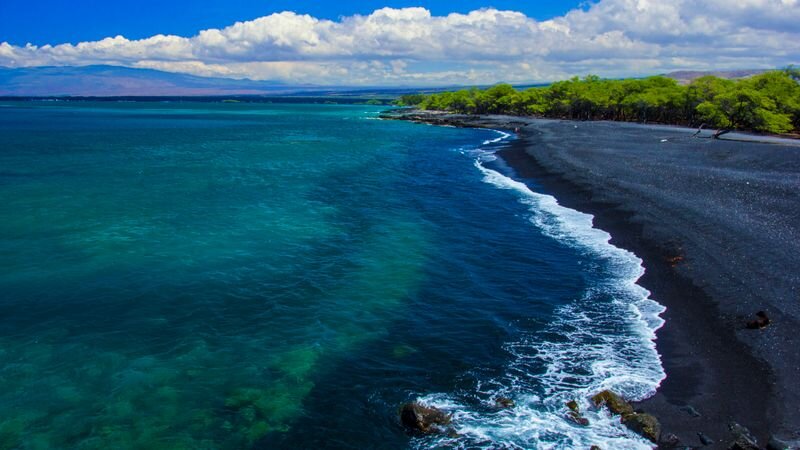
A black sand beach about an hour south of Hilo (on the way to or from Volcanoes National Park via the southern route). The sand is actually tiny fragments of basalt — lava that shattered when it hit the ocean. Hawaiian green sea turtles haul out on this beach regularly, sometimes a dozen at a time, and they're the main draw. Don't touch them (15-foot distance required by law), but you can watch and photograph from close range. The beach has picnic pavilions, restrooms, and coconut palms. The swimming is rough (rocky bottom, strong currents), so it's more of a viewing and walking beach.
7. Pepe'ekeo Scenic Drive
A 4-mile detour off Highway 19 about 10 minutes north of Hilo — a narrow, winding road through a tunnel of tropical trees, past old sugar plantation bridges, and along a stream-cut valley. It's the kind of old Hawaii road that the modern highway bypassed but never replaced. The Hawaii Tropical Bioreserve & Garden is along this route (see below). The drive itself takes about 15 minutes without stops and gives you a feel for what rural Hilo looked like before the highway was built.
8. Hawaii Tropical Bioreserve & Garden
A 40-acre botanical garden in a tropical valley on the Pepe'ekeo Scenic Drive, about 10 minutes north of Hilo. The garden holds over 2,000 species of tropical plants in a natural ono-mea valley setting — heliconias, gingers, orchids, bromeliads, palms, and fruit trees lining a trail that descends to a waterfall and the ocean. It's one of the most beautiful botanical gardens in the US, and the valley setting (with a stream, ocean views, and native forest) makes it feel less like a garden and more like an expedition. Allow 1.5 to 2 hours. Best in the morning before rain.
9. Downtown Hilo
Hilo's downtown sits along Kamehameha Avenue facing the bay. The buildings are a mix of early 1900s storefronts, some restored and some pleasantly weathered. It's a real town — not a tourist district — with local shops, cafes, and the kind of casual, unhurried feel that's disappeared from most of Hawaii. The Palace Theater (a 1925 movie house) hosts films and live events. Cafe 100 is the birthplace of the loco moco (rice, hamburger patty, fried egg, gravy — Hawaii's iconic comfort food). Ken's House of Pancakes is the 24-hour local institution. Two Ladies Kitchen is a tiny shop known for mochi-wrapped strawberries that sell out every day.
10. Richardson Ocean Park
A small beach park at the end of Kalanianaole Avenue on Hilo's south shore — one of the few swim-friendly spots near town. The beach is a mix of black sand and tide pools, and Hawaiian green sea turtles feed in the waters just offshore (regular sightings). The snorkeling is decent when conditions are calm — you'll see tropical fish and turtles in the shallow reef. There are restrooms, showers, and a lifeguard. The adjacent Carlsmith Beach Park (also called Four Mile Beach) has a freshwater-fed pool that's popular with locals.
11. Mauna Kea from the Hilo Side
The Saddle Road (Daniel K. Inouye Highway) connects Hilo and Kona across the volcanic interior of the island, passing between Mauna Kea and Mauna Loa. The turnoff to the Mauna Kea Visitor Information Station (VIS) is about 45 minutes from Hilo. The VIS at 9,200 feet has free stargazing programs on select evenings, and the drive from Hilo to the summit access road passes through some of the Big Island's most otherworldly terrain — lava fields, cinder cones, and alpine desert. The summit (13,796 feet, 4WD recommended above VIS) hosts the world's most powerful telescopes and views of the Milky Way that rival any on Earth.
12. Boiling Pots (Pe'epe'e Falls)
Upstream from Rainbow Falls on the Wailuku River, Boiling Pots is a series of natural pools connected by small waterfalls where the river drops through a lava-carved gorge. When the river is running high (which is often, given the rainfall), the pools churn and bubble — hence the name. There's a viewpoint with a short trail. Swimming is prohibited due to strong currents and flash-flood risk (this river has taken lives). But as a viewing stop paired with Rainbow Falls, it's a 10-minute addition that shows you what 130 inches of rain per year does to a landscape.
Book a Big Island Tour
From volcano hikes to waterfall adventures — find the right tour for your trip.
Browse All Tours →13. Waipio Valley Lookout
About an hour north of Hilo on the Hamakua Coast, the Waipio Valley overlook gives you a view into one of the most dramatic landscapes in Hawaii — a deep, green valley with 2,000-foot cliffs, a black sand beach, and a river winding through taro fields. The valley was once home to Hawaiian chiefs and held great spiritual significance. You can view it from the overlook (easy, paved) or descend on the extremely steep road (4WD only, or walk — it's a 25% grade). Guided tours run into the valley by van or horseback. The overlook alone is worth the drive along the scenic Hamakua Coast from Hilo.
14. Imiloa Astronomy Center
A museum and planetarium on the University of Hawaii Hilo campus that connects Hawaiian cultural astronomy (star navigation, Polynesian wayfinding) with modern telescope science on Mauna Kea. The exhibits are well-designed and the planetarium show is excellent — it places you under the same sky Polynesian navigators used to find Hawaii a thousand years ago. It's a good rainy-afternoon activity and gives context for why Mauna Kea matters both scientifically and culturally. Allow about 1.5 to 2 hours.
Frequently Asked Questions
Is Hilo worth visiting on the Big Island?
Yes. Hilo is the lush, green, authentic side of the island. It's the closest base to Volcanoes National Park, has spectacular waterfalls, the state's best farmers market, and a local downtown that hasn't been converted into a resort strip.
Does it rain a lot in Hilo?
Yes — about 130 inches per year. But mornings are often sunny, with rain arriving by mid-afternoon. Plan outdoor activities for the morning and you'll usually have good conditions.
How far is Hilo from Volcanoes National Park?
About 30 miles, roughly 45 minutes by car. Hilo is the closest town to the park and the best overnight base for volcano exploration, especially if you want to see the crater glow after dark.
Is Hilo or Kona better for tourists?
Kona for sunshine, beaches, and resort amenities. Hilo for waterfalls, rainforests, volcano access, and local culture. Most visitors stay in Kona and day-trip to Hilo, but a night or two on the Hilo side gives you time to see the park properly and experience a different side of the island.