Nā Pali Coast: The Cliffs That Made Kauai Legendary
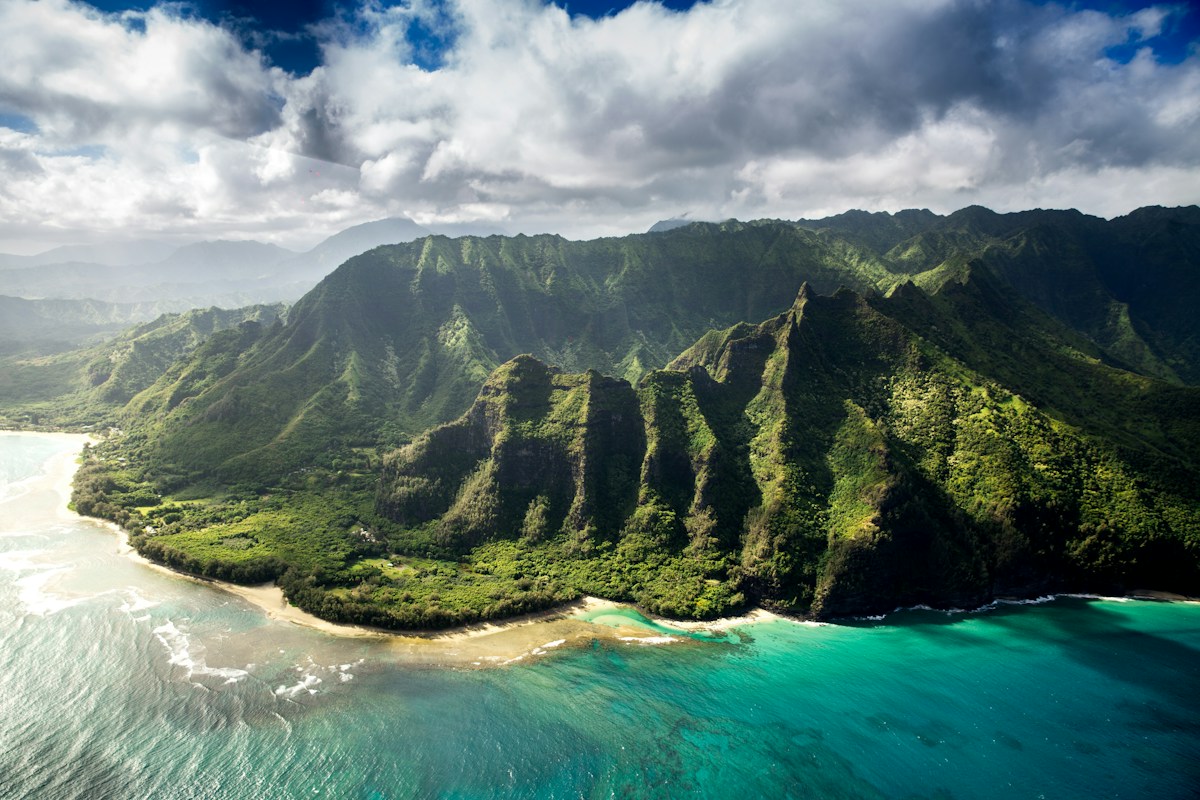
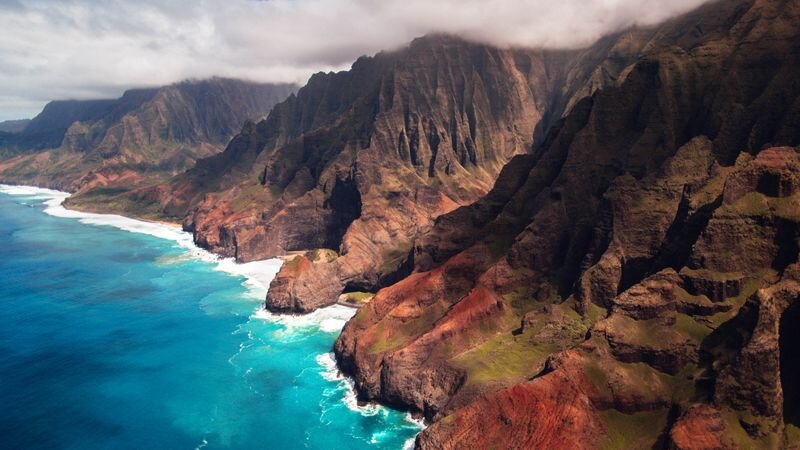
There is no road to the Nā Pali Coast. The northwest shore of Kauai has never been paved, never been developed, and has no bridge connecting it to the rest of the island. The cliffs — up to 4,000 feet tall, fluted and rippled by millions of years of rainfall into something that looks less like a coastline than like a cathedral organ made of green stone and falling water — simply refuse to be domesticated.
Nā Pali means "the cliffs" in Hawaiian. The coastline stretches about 17 miles along Kauai's northwest shore, from Keʻe Beach in the north to Polihale State Park in the southwest, with no road access to the middle. Getting there requires either a boat, a helicopter, or your feet on the Kalalau Trail — the 11-mile backcountry hiking route that is arguably the most spectacular and most demanding coastal trail in the United States.
The landscape has appeared in more films than almost any other natural setting in the world. When filmmakers need a prehistoric jungle, a lost world, a fantasy kingdom's skyline — they come to Nā Pali. Jurassic Park's jungle scenes were filmed in the Hanakāpīʻai Valley here. Steven Spielberg's Raiders of the Lost Ark opened with footage from Kauai. The floating mountains in Avatar were modeled on Nā Pali's valleys. The landscape is simply too extreme to be set-designed.
The Geology: Kauai's Age and the Ocean's Work
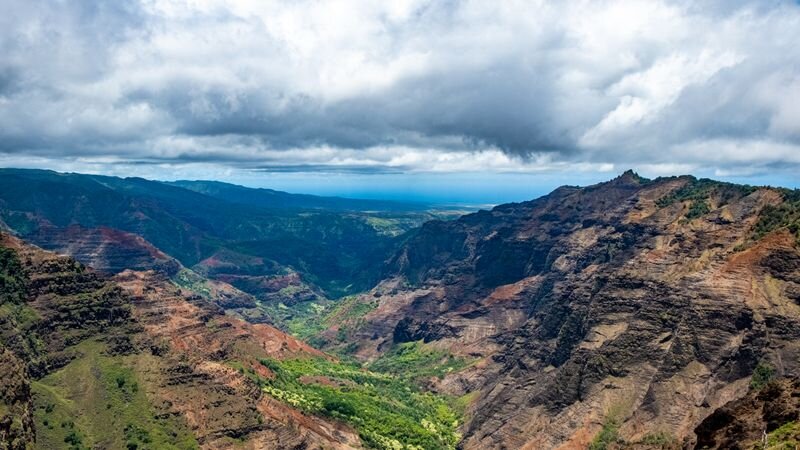
Kauai is the oldest of the main Hawaiian Islands — formed over the hotspot roughly 5 to 6 million years ago. While the Big Island is still geologically active and relatively young, Kauai has had millions of years for erosion to work. The Nā Pali cliffs are the result of that erosion working on one of the wettest spots on Earth: Mount Waialeale at the center of the island receives an average of around 450 inches of rain per year, making it one of the wettest places in the world.
That water runs downslope from the interior through deep valleys — the Kalalau, Honopu, Awa'awapuhi, Nu'alolo — cutting the cliffs as it goes. The fluted, ribbed texture of the cliff faces is carved by countless streams running parallel lines down the rock face over millions of years. What looks like intentional architecture from a boat is the mark of relentless water on soft basalt over geologic time.
The valleys hidden behind the cliffs — reachable only by the Kalalau Trail or by small boats landing on boulder beaches — once held thriving Hawaiian communities. Archaeological evidence shows continuous human habitation in the Kalalau Valley for over 1,000 years before Western contact. The valley walls still contain irrigation channels, terraced taro fields, and heiau (temple platforms) carved into the landscape by those communities.
Three Ways to See Nā Pali
By boat: In summer (May through September), catamaran and inflatable raft tours depart from Hanalei Bay or Haena State Park and run the coast, entering sea caves, spotting spinner dolphins and green sea turtles, and landing on boulder beaches accessible only from the water. The raft tours get closer to the cliffs; the catamarans are more comfortable for those prone to seasickness. In winter, north swells make the north shore inaccessible and most operators run from Port Allen on the south coast instead.
By helicopter: A helicopter tour of the Nā Pali Coast offers a perspective impossible from the ground or sea — flying level with the tops of the cliffs and into the hidden valleys. The Honopu Valley, accessible only to helicopters and the most committed hikers, is one of the most spectacular spots in Hawaii and can only be seen from the air for most visitors.
On foot: The Kalalau Trail begins at the end of the road at Keʻe Beach and runs 11 miles along the coast to the Kalalau Valley. The first 2 miles to Hanakāpīʻai Beach are accessible without a permit and give a taste of the terrain. Beyond that, a permit from the state of Hawaii is required for camping and day hiking. The full 11-mile trail involves significant elevation change, exposed cliff-edge traverses, and stream crossings that can be dangerous in wet conditions. It is a serious backcountry undertaking — and one of the most extraordinary hikes in the world.
Boat tour tip: Morning boat tours from Hanalei Bay in summer offer the best combination of calm water, good light, and wildlife activity. Book well in advance — summer tours sell out weeks ahead. Sea conditions can change rapidly on the Nā Pali coast; operators reserve the right to cancel tours if conditions are unsafe. This is the right call — the coast is not something to take lightly from a small boat.
The Nā Pali in Hawaiian Tradition
The Nā Pali valleys were inhabited for centuries by Hawaiian communities who farmed taro in the stream valleys, fished the coast, and lived with the seasonal rhythms of the Pacific. The isolation of the coast — accessible only by sea or on foot along cliff-edge trails — made it a refuge during times of political conflict. Oral traditions from the Nā Pali region are among the richest in Hawaiian literature; the valley names carry histories of chiefs, battles, droughts, and migrations.
Today, Nā Pali Coast State Wilderness Park manages much of the coastline. The park's policies balance access with protection of both the natural landscape and the archaeological heritage in the valleys. Camping permits are strictly limited. The wilderness designation reflects a recognition that the coast's power comes precisely from its inaccessibility — that some places are best left as they are.
Explore the Nā Pali Coast by Sea
Boat tours from Hanalei and Port Allen bring you up close to the cliffs, into sea caves, and along the most dramatic coastline in the Pacific. Compare options and check seasonal availability.
Kauai Boat & Kayak Tours →Frequently Asked Questions
How do you get to the Nā Pali Coast?
Three ways: by boat (catamaran or raft tours from Hanalei or Port Allen, depending on season); by helicopter (aerial tours fly along the cliffs and into the valleys); or on foot via the Kalalau Trail (11 miles, permit required beyond the 2-mile mark). There is no road access.
What movies have been filmed on the Nā Pali Coast?
Jurassic Park, Raiders of the Lost Ark, King Kong (2005), Pirates of the Caribbean: On Stranger Tides, and many others. The landscape is so extreme that filmmakers regularly use it as a stand-in for prehistoric or fantasy environments.
When is the best time to visit the Nā Pali Coast?
Summer (May–September) for boat tours from the north shore and the Kalalau Trail. Winter swells close the north shore to boats; operators run from Port Allen on the south coast instead. Helicopter tours operate year-round weather permitting.