Haleakalā: Inside Maui's Dormant Volcano and Silversword Sanctuary
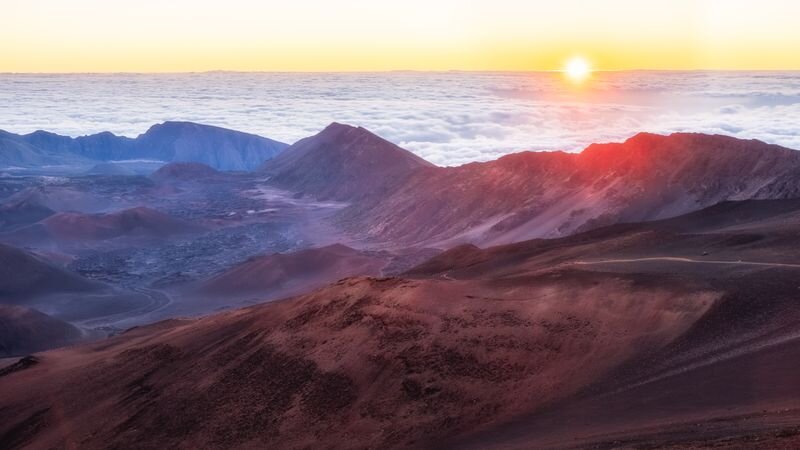
At 10,023 feet above sea level, Haleakalā's summit is a different planet. The temperature can drop to near freezing even in summer. Wind cuts across the exposed lava fields with nothing to slow it for miles. Clouds hang below the crater rim, and on clear mornings the shadow of the volcano stretches all the way to the horizon across the sea. This is one of the most unusual landscapes in the Pacific — and it is home to a plant found nowhere else on Earth.
The Haleakalā silversword (Argyroxiphium sandwicense macrocephalum), known in Hawaiian as ʻāhinahina ("very gray"), spends anywhere from 15 to 50 years growing in a tight rosette of silver-haired leaves on the cinder slopes of the crater. Then, once in its life, it sends up a flowering stalk up to two meters tall carrying hundreds of reddish flower heads. It blooms for a few weeks. Then it dies. No second flowering, no dormancy — one shot, after decades of preparation.
The silversword and the volcano it lives on are inseparable parts of the same story: extreme elevation, volcanic substrate, isolation, and the relentless pressure of evolution in a place where almost nothing else can survive.
The Geology: How Haleakalā Was Built
Haleakalā — "House of the Sun" in Hawaiian — is a shield volcano, the second of two that built the island of Maui. (The West Maui Mountains are the heavily eroded remains of the first volcano.) Shield volcanoes grow through repeated, relatively gentle lava flows that pile up gradually into a broad, rounded form rather than the steep cone shape of composite volcanoes. Over hundreds of thousands of years, lava flows built Haleakalā from the ocean floor to its current summit.
What most people call the "crater" at the summit is not technically a crater in the geological sense — it is a caldera-like depression created largely by erosion, formed where two large stream valleys cut back into the summit and merged. Subsequent eruptions partially filled this depression with cinder cones, lava flows, and ash, creating the colorful, otherworldly landscape visible from the crater rim today. The depression is roughly 7 miles long, 2 miles wide, and up to 2,600 feet deep — large enough to contain the island of Manhattan.
Haleakalā's last eruption occurred somewhere between 400 and 600 years ago, placing it in the dormant (not extinct) category. The USGS monitors it continuously.
The Silversword: A Plant That Flowers Once and Dies
The silversword's story begins with a California tarweed — a scrubby, unremarkable plant from the western slopes of the Sierra Nevada. Roughly 5 million years ago, seeds from a tarweed ancestor blew across the Pacific and landed in Hawaii. Over millions of years, those seeds evolved in isolation into the Silversword Alliance — more than 50 endemic plant species found nowhere else on Earth, spread across the Hawaiian Islands.
The Haleakalā silversword is the most dramatic of this group. Its leaves are covered in fine, silvery hairs that reflect intense ultraviolet radiation and insulate the plant against the extreme temperature swings at high altitude — hot by day, near-freezing at night. The same hairs that give the plant its metallic sheen are engineering adaptations for survival in one of the harshest terrestrial environments in the Pacific.
The plant's root system is wide but shallow, spreading close to the surface to catch moisture from fog and the rare rain that reaches the summit. This makes it extremely vulnerable to foot traffic — stepping within a few feet of a silversword can compact the soil enough to kill it, even without touching the plant. Boardwalks and barriers at Haleakalā National Park protect the surviving population, which numbered in the tens of thousands before feral goats, deer, and climate change began taking a toll in the 20th century.
Visiting tip: Stay on designated trails and boardwalks near silverswords. Never step inside the rope barriers. The plants are federally protected. The flowering stalk is most commonly seen in summer (roughly June–July), though the timing varies by plant. Sunrise visits require an advance reservation through the National Park Service website (recreation.gov) — spots fill weeks in advance.
Māui and the House of the Sun
Hawaiian mythology holds that the demigod Māui once climbed to the summit of Haleakalā and lassoed the sun as it rose. In those days, the story goes, the sun moved too fast across the sky — the days were too short, crops couldn't ripen, and Māui's mother's kapa cloth couldn't dry before nightfall. Māui wove a rope from his sister's hair and caught the sun's rays as they crested the rim, forcing the sun to promise to slow its passage across the sky and give Hawaii longer days.
The story explains why Hawaii has long days in summer, and why the summit was considered a place of sacred power. Haleakalā, "House of the Sun," was a site of religious significance long before it became a national park. Ancient Hawaiians buried their dead in the summit area, and the alignment of the crater with celestial events held meaning for practitioners of traditional Hawaiian astronomy.
What Visiting Haleakalā Looks Like
The road to Haleakalā's summit (Crater Road / Highway 378) climbs 10,000 feet in about 38 miles from sea level — one of the steepest paved roads in the world in terms of elevation gain per mile. The drive through zones is a lesson in altitude ecology: tropical forest gives way to shrub, shrub to grassland, grassland to bare cinder. By the summit, the landscape is lunar.
The summit visitor center at the rim offers the most dramatic views into the crater. Several hiking trails descend into the crater floor — the Sliding Sands Trail and Halemauʻu Trail are the main options. The crater floor hike is strenuous (6+ miles one way on the Sliding Sands) and the altitude affects most visitors. Haleakalā National Park charges an entrance fee. Sunrise visits require reservations from roughly 3 a.m. to 7 a.m.
Explore Maui from the Summit Down
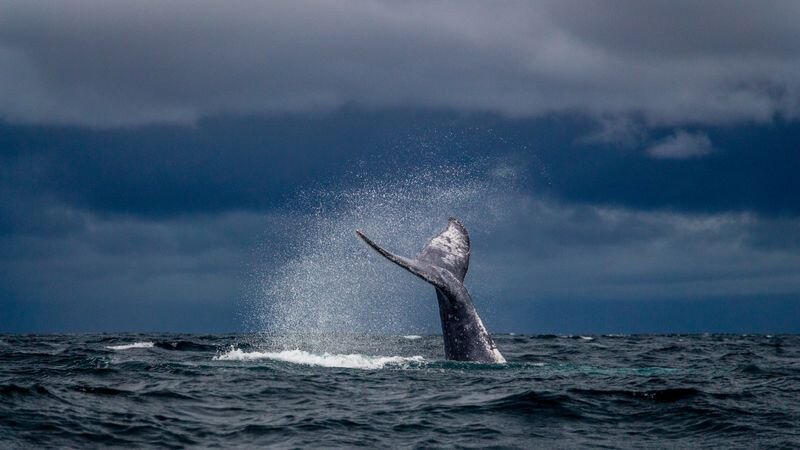
Maui tours range from sunrise at Haleakalā to Road to Hana, snorkeling at Molokini, and sunset whale watching. Compare options with live availability.
Browse Maui Tours →Frequently Asked Questions
How tall is Haleakalā?
Haleakalā's summit stands at 10,023 feet (3,055 meters) above sea level. It is the highest point on Maui and among the highest peaks in Hawaii.
What is the silversword plant?
The Haleakalā silversword is a plant endemic to Maui's summit — it grows nowhere else on Earth. It lives 15–50 years in a slow-growing rosette, flowers once (producing hundreds of flower heads on a stalk up to two meters tall), then dies. It is endangered and federally protected.
Is Haleakalā an active volcano?
Dormant, not extinct. Its last eruption is estimated between 400–600 years ago. The USGS monitors it continuously. It is capable of future eruptions.
What does "Haleakalā" mean?
"House of the Sun." In Hawaiian mythology, the demigod Māui climbed to the summit and lassoed the sun to slow its passage across the sky, giving people more daylight.