Maui Whale Watching 2026: Best Tours, When to Go & What to Book

Maui sits at the center of the Hawaiian Humpback Whale National Marine Sanctuary—roughly 10,000 humpback whales spend winter in the channel between Maui, Lanai, and Molokai. This is the largest concentration of humpback whales in the North Pacific and one of the best whale watching locations in the world.
The difference between Maui's whale watching and other destinations is activity. These whales aren't feeding—they're breeding, giving birth, and socializing. That means they're constantly moving, breaching, tail-throwing, and vocalizing. On a 2-hour tour in peak season, seeing 15–30 individual whales is normal.
Whale Season: When to Go
Humpbacks arrive in Hawaiian waters as early as November and leave by late April. The population builds through January and February, peaks in February–March, then disperses as whales begin migrating back to Alaskan feeding grounds.
| Month | Whale Activity | Notes |
|---|---|---|
| November | Early arrivals | Fewer whales, less competition for boats |
| December | Building | Good sightings, holiday crowd on boats |
| January | Strong | Increasing whale activity, good value |
| February | Peak | Best month — maximum whale density |
| March | Peak | Best month — many mothers with calves |
| April | Tapering | Mothers and calves still present, adults departing |
February and March are when you'll see the most competitive groups—males competing for females, breaching, pec-slapping, and generally putting on a show. March also brings the most mother-calf pairs, which behave differently: calves practice near the surface, and mothers stay close. April has fewer whales overall but the calves visible are older and more active.
Best Maui Whale Watching Tours
Maui has dozens of whale watching options ranging from 2-hour quick tours to half-day expeditions. The right choice depends on your budget, seasickness tolerance, and what kind of experience you want.
Eco-Raft: Eye-Level Whale Watch Tour
Hawaii Ocean Rafting uses a small inflatable raft that puts passengers at water level. When a humpback surfaces next to the boat, you're genuinely at eye level with the animal. Limited to 16 passengers for a focused, non-crowded experience. Marine naturalists provide narration. Includes fruit, chips, and beverages. Free cancellation available.
Duration: 2 hours • Operator: Hawaii Ocean Rafting • Departs: Lahaina Harbor
Check Availability →Eco-Raft: Dolphin or Whale Search & Sightsee Tour
Same raft format as above, with more flexibility to follow dolphins if they're around (spinner dolphins are common on the west side year-round). Naturalist-led, small group. A good option if you're visiting outside peak whale season but still want marine life. Free cancellation.
Duration: 2 hours • Operator: Hawaii Ocean Rafting • Departs: Lahaina Harbor
Check Availability →2 Hour Whale Watch – Sea Maui
Sea Maui runs whale watches on their catamaran from Lahaina. More stable than a raft option, with more deck space. Better for families with young children or anyone who wants a smoother ride. Catamaran means less intimate—larger group—but also more stable if seas are choppy. Free cancellation with TripSafe.
Duration: 2 hours • Operator: Sea Maui • Departs: Lahaina Harbor
Check Availability →Whale Watch Adventure – Kai Kanani
Kai Kanani runs whale watches from Makena Landing on their performance sailing catamaran. The South Maui departure gets you into the whale channel quickly. They guarantee whale sightings or your next tour is free—a claim other operators don't make. Naturalists on board. 2.5-hour trip.
Duration: 2.45 hours • Operator: Kai Kanani • Departs: Makena Beach
Check Availability →From Ma'alaea Harbor: Maui Whale Watch Cruise
Quicksilver Maui departs from Ma'alaea Harbor—the state's second-busiest harbor for whale watching tours. Larger boat means a more stable ride. Good option for those staying in South Maui or Kihei who want easy harbor access. Free cancellation.
Duration: 2 hours • Operator: Quicksilver Maui • Departs: Ma'alaea Harbor
Check Availability →Ma'alaea Signature Whale Watch – Hawaii Nautical
Hawaii Nautical runs their Signature Whale Watch on Amore, a 42-foot Boston Whaler 420 Outrage—a purpose-built performance boat for comfort and stability. Smaller than most catamaran tours, with better maneuverability to position near active whales. Free cancellation.
Duration: 2 hours • Operator: Hawaii Nautical – Maui • Departs: Ma'alaea Harbor
Check Availability →Lahaina vs. Ma'alaea: Which Harbor?
Both harbors are viable—the choice is primarily about location convenience and boat type preferences.
| Factor | Lahaina Harbor | Ma'alaea Harbor |
|---|---|---|
| Location | West Maui | Central South Maui |
| Drive from Kihei | 35–45 min | 10 min |
| Drive from Kaanapali | 5–10 min | 25–30 min |
| Typical boat types | Rafts, smaller boats | Larger catamarans |
| Whale channel proximity | Slightly closer | Slightly more time to reach |
| Parking | Paid, limited | More available |
Bottom line: If you're staying in West Maui, use Lahaina. If you're in South Maui or Kihei, use Ma'alaea. Whale sightings are equally good from both departure points—you're heading to the same channel regardless.
What You'll Actually See
In Hawaiian waters, humpbacks behave differently than at feeding grounds in Alaska. They're not eating—they have enough stored fat to sustain them through the entire winter. All their energy goes toward breeding behaviors. This makes for dramatic, active sightings.
- Breaching: The full-body leap out of the water. The most photographed behavior. Happens fast—burst mode on your camera is essential.
- Pec slaps: Whales roll on their side and slap their 15-foot pectoral fins repeatedly on the surface. Creates a massive splash and loud crack you can hear from far away.
- Spy hopping: Head pokes straight up out of the water, apparently to look around. Slower and more sustained than breaching.
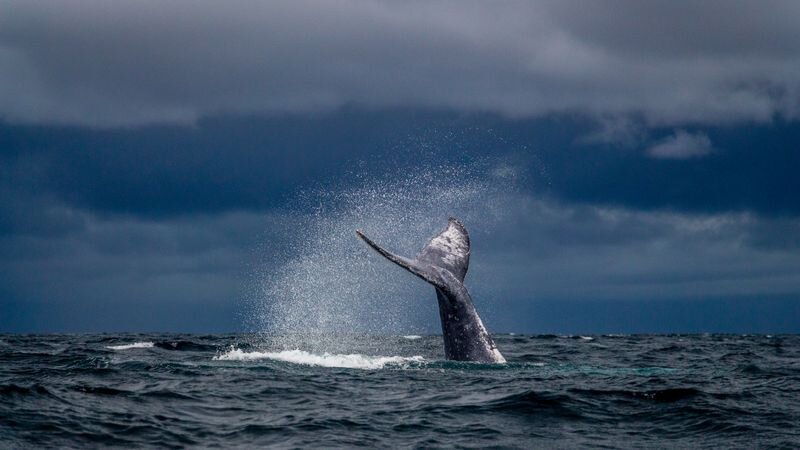
- Tail throws (peduncle throw): The whale throws its tail and lower body out of the water—aggressive displays by competing males.
- Logging: Resting at the surface, floating motionless. Common for mother-calf pairs in the afternoon.
- Singing: Males produce complex vocalizations underwater. Hydrophones (underwater microphones) on some boats let you hear this through speakers.
Mother-calf pairs typically stay in shallower water near Maui, Lanai, and Molokai. The calves need to breathe every 3–5 minutes, so they're surfacing constantly. When you see a small whale close to a large one, that's a calf—born at 14 feet long, gaining 100 lbs per day on mother's milk.
Boat Type: Raft vs. Catamaran vs. Sailboat
Inflatable raft (Zodiac): Gets you closest to eye level. More intimate, smaller group. The ride is rougher in choppy conditions. Best for people who want maximum immersion and don't mind some bounce.
Catamaran: Most stable option, more deck space, onboard restrooms. Better for families with children or anyone sensitive to motion. You'll still see whales clearly—just from a higher vantage point.
Sailboat/performance boat: The middle ground. Quieter engines (important for whale interaction—boats must cut engines near whales), more maneuverability than big catamarans. Kai Kanani's sailing catamaran falls here.
Photography Tips
Camera settings: Set to burst mode (continuous shooting). Breaches are over in 2–3 seconds. You want 10+ frames per second if your camera supports it. ISO 400–800 in good morning light, higher if overcast.
Lens: A zoom in the 70–200mm range is ideal. Smartphones can capture good close-up moments when whales surface near the boat, but miss most action shots from distance.
Anticipation: Watch where whales surface, then track their pattern. They typically surface 3–5 times in succession before diving for 5–15 minutes. Position yourself for where they'll likely surface next.
Wind direction: Bring a light layer or windbreaker. The ocean breeze at 8am can feel cold even when the beach is warm. Bring a dry bag for your camera equipment if rain is possible.
Rules and Regulations
Federal law prohibits approaching humpback whales within 100 yards. Tour operators are trained and follow the regulations. Occasionally, whales approach boats voluntarily—this is allowed and legal; the restriction is on human-initiated approach. Drones require special permits near whales and are generally prohibited by commercial operators.
Book Your Maui Whale Watch
Compare all Maui whale watching tours with real-time availability. Book direct with local operators.
Browse Whale Watch Tours →Combining Whale Watching with Other Activities
Several Maui tours combine whale watching with snorkeling during the December–March window. The Molokini Crater Snorkel & Bonus Whale Watching Adventure from Makena Coast Charters is specifically designed for this. You get Molokini snorkeling in the morning and opportunistic whale sightings on the way out and back—no guarantee, but in February and March it would be more unusual NOT to see whales.
Sunset dinner cruises during whale season also reliably include sightings—the whales are active in the late afternoon, and the light is better for photography at that time anyway.