Humpback Whales of Hawaii: Why They Chose Maui
Every autumn, humpback whales leave their feeding grounds in the cold, nutrient-rich waters of Alaska and begin one of the longest migrations of any mammal on Earth — roughly 3,000 miles southwest to the warm, shallow seas of the Hawaiian Islands. They arrive in Hawaiian waters beginning in November, and the population builds through December and January, peaking somewhere around 10,000 individuals by peak season. By April or May, they're gone — heading north again to eat.
Most of them go to Maui. More specifically, most of them go to the Auʻau Channel, the shallow passage between Maui, Lānaʻi, and Molokaʻi. The Hawaiian Islands Humpback Whale National Marine Sanctuary, which covers much of the waters around Maui, was established in 1992 specifically because of this concentration — the largest humpback congregation in the North Pacific happens here, in these particular miles of ocean, for reasons that are partly understood and partly still mysterious.
The Auʻau Channel: Why This Particular Water
The Auʻau Channel is unusually shallow for mid-ocean — most of it is less than 600 feet deep, in contrast to the open Pacific dropping to thousands of feet. The water is warm, protected from large ocean swells by the surrounding islands, and relatively calm. These are ideal conditions for giving birth and nursing calves, which arrive without the thick blubber layer that helps adult whales regulate body temperature.
A newborn humpback calf weighs roughly a ton and measures about 10 to 15 feet at birth. It needs to nurse for several months on milk that is extraordinarily rich in fat — humpback milk is around 45% fat, compared to human milk at about 4%. The calf grows rapidly, gaining weight by the hundreds of pounds per day. During this time, it needs calm, warm water to conserve the energy that would otherwise go toward thermoregulation.
The North Pacific humpback population has been returning to the Hawaiian Islands for this purpose for as long as anyone can document — and almost certainly for thousands of years before that. The whales find the same waters, the same channels, by mechanisms that scientists still do not fully understand. They navigate across thousands of miles of open ocean without landmarks, guided by some combination of magnetic field sensitivity, water temperature, and possibly celestial cues.
What the Whales Are Doing: Song, Competition, and Birth
The humpbacks in Hawaiian waters are not feeding. They eat little or nothing during their time here — living off the enormous fat reserves they built up during the summer feeding season in Alaska. Everything the whales do in Hawaii is about reproduction: the males competing for females, the females giving birth and nursing, the calves growing fast enough to survive the northward migration in spring.
Male humpbacks sing in Hawaii. The song is one of the most complex vocalizations of any non-human animal — a series of moans, cries, and chirps that can last 20 minutes and is repeated for hours or days. All male humpbacks in a given ocean basin sing essentially the same song at the same time, and the song evolves: certain phrases are added or dropped and the changes spread through the population within a single season. Researchers believe the song plays a role in male competition or mate attraction, though its exact function is still debated.
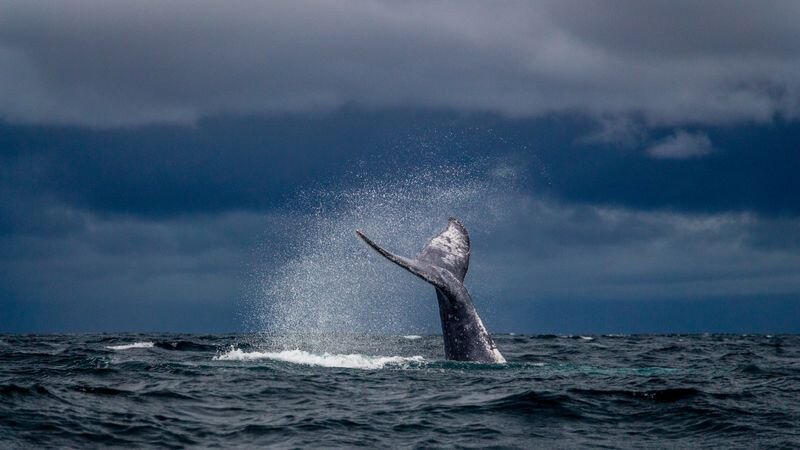
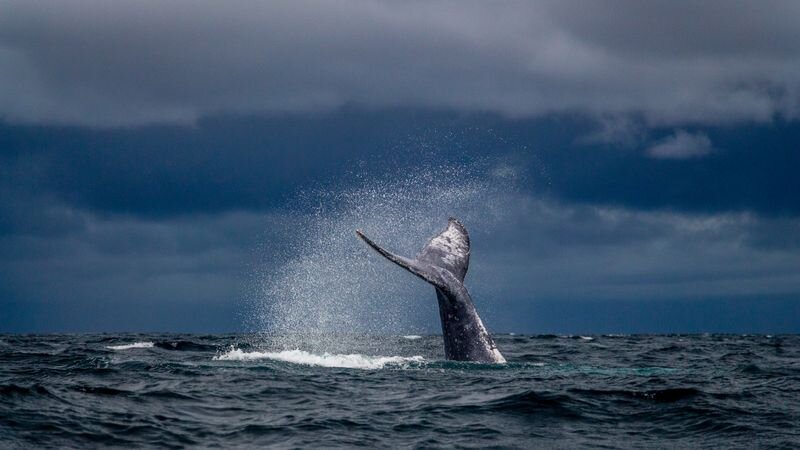
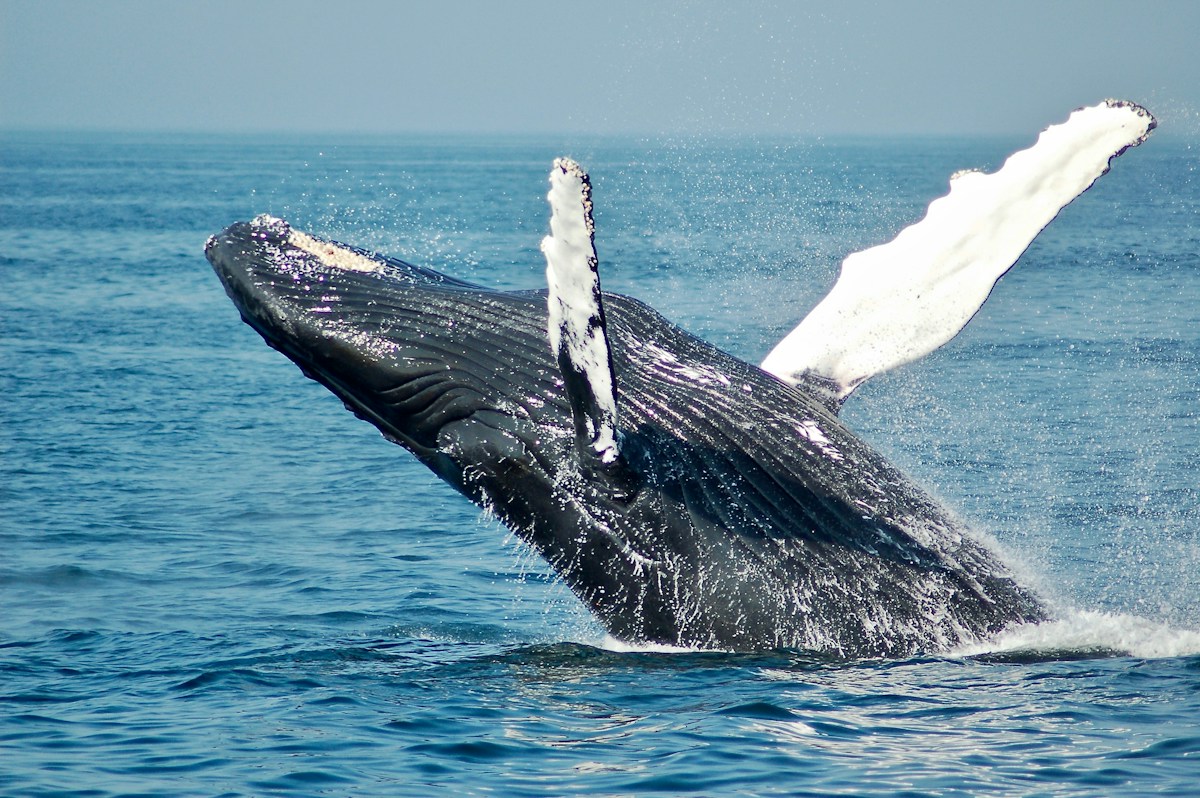
The behaviors visible from the surface — breaches, tail slaps, pec fin slaps, spy hops — are largely secondary to what's happening underwater. A breach (a humpback launching its 40-ton body mostly or entirely out of the water) may serve as communication, a display of fitness, or parasite removal. No one knows for certain. What is certain is that watching a 45-foot whale clear the water in front of your boat is among the most astonishing things you can witness in the natural world.
Best viewing: Peak season is January through March. Whale watching cruises from Lahaina Harbor and Maalaea Harbor are the best way to see humpbacks up close. From shore, you can spot breaches and spouts from any elevated point on West Maui's coastline — the Pali Highway overlook, Kapalua headlands, and the Lahaina seawall all provide sightlines over the Auʻau Channel. Bring binoculars.
Conservation: From Near-Extinction to Recovery
North Pacific humpback whales were hunted to the edge of extinction by commercial whaling operations in the late 19th and early 20th centuries. By the mid-20th century, the worldwide humpback population had been reduced to a small fraction of its pre-whaling numbers. The International Whaling Commission banned commercial humpback whaling in 1966. The U.S. listed the species as endangered in 1970.
The recovery has been significant. The North Pacific population, which feeds in Alaska and winters in Hawaii and Mexico, was removed from the U.S. endangered species list in 2016 and reclassified as threatened. Estimates suggest the North Pacific population has recovered to somewhere in the range of 10,000 to 20,000 individuals — still well below pre-whaling levels, but growing.
The Hawaiian Islands Humpback Whale National Marine Sanctuary enforces strict regulations around whale interactions. Boats must maintain a minimum distance from whales (currently 100 yards for most vessels). Swimming with or approaching humpback whales is prohibited. The regulations exist because human disturbance during the breeding and birthing season can interrupt behaviors critical to the population's continued recovery.
Watching Whales: What to Expect
Whale watching tours in Maui run from December through April, with the highest density of sightings in January and February. Most tours operate from Lahaina Harbor on the west side of Maui or from Maalaea Harbor on the south coast. The Auʻau Channel is directly off both harbors — on good days, whales are visible within minutes of leaving the dock.
A typical two-hour whale watching cruise will have multiple sightings. Common behaviors include blow (spout), surface rest, pec fin wave, tail slap, and if you're lucky, a full breach. Mother-calf pairs are particularly visible in January and February, when calves are young enough to stay close to their mothers near the surface.
Book a Maui Whale Watching Tour
The Auʻau Channel off Maui is the best place in the world to watch humpback whales. Compare tours with live availability and book your spot.
See Maui Whale Watching Tours →Book a whale watch for this season
Three tours we'd send a friend on, all bookable now for the December–April season. Prices are per adult and come straight from the operator's live calendar.
Eco-Raft: Eye-Level Whale Watch Tour
Hawaii Ocean Rafting's small inflatable puts you at water level, 16 passengers max, with a naturalist narrating. The closest legal look at a humpback you can get. Free cancellation.
Duration: 2 hours • Operator: Hawaii Ocean Rafting • Departs: Lahaina Harbor
Check Availability →Whalewatch • Maʻalaea – Pacific Whale Foundation
The research nonprofit's own whale watch, with certified marine naturalists and a portion of every fare funding humpback research. Maʻalaea departure puts you in the channel fast.
Duration: 2 hours • Operator: Pacific Whale Foundation • Departs: Maʻalaea Harbor
Check Availability →Whale Watch Adventure – Kai Kanani
Performance sailing catamaran from Makena with a whale-sighting guarantee: no whales, your next tour is free. South Maui departure, naturalists on board.
Duration: 2.5 hours • Operator: Kai Kanani • Departs: Makena Beach
Check Availability →Frequently Asked Questions
When do humpback whales come to Hawaii?
They arrive in November and December, with numbers peaking from January through March. Most have departed by April. Peak season — January through March — offers the best chance of multiple sightings on a single whale watching cruise.
Why do humpback whales go to Maui specifically?
The Auʻau Channel between Maui, Lānaʻi, and Molokaʻi offers warm, shallow, calm water — ideal conditions for birthing and nursing calves. The North Pacific humpback population has been returning to these specific waters for thousands of years.
What do humpback whales do in Hawaii?
Breed, give birth, and nurse calves. They eat little or nothing in Hawaiian waters, living off fat reserves from the summer feeding season in Alaska. Males sing complex songs. Females give birth and nurse rapidly-growing calves before the spring migration back to Alaska.