Duke Kahanamoku: The Man Who Gave Surfing to the World
In 1912, a young man from Waikiki who had never competed internationally arrived at the Stockholm Olympics and swam the 100-meter freestyle so fast that officials thought the timing equipment had malfunctioned. They made him swim it again. He swam it even faster. Duke Paoa Kahinu Mokoe Hulikohola Kahanamoku won the gold medal and broke his own world record. He went on to compete in three more Olympic Games, winning five medals total, while also becoming the person most responsible for spreading surfing from Hawaii to the rest of the world.
When Duke was growing up in Waikiki in the early 1900s, surfing was already in danger of disappearing. Western missionaries who arrived in Hawaii in the 19th century had discouraged or prohibited many traditional Hawaiian practices — surfing among them, viewed as frivolous or immoral. By the turn of the century, what had been a central part of Hawaiian life for centuries had shrunk to a small number of practitioners, mostly in Waikiki. Duke was one of them. When he left Hawaii to compete internationally, he brought his surfboard, and gave demonstrations wherever he went.
Born at the Foot of Diamond Head
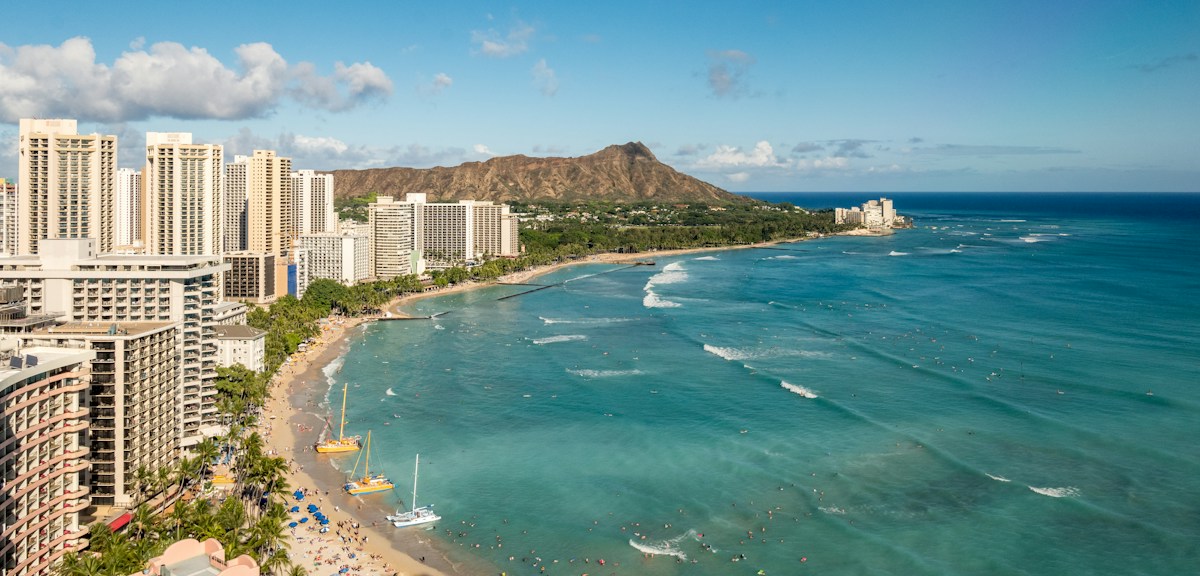
Duke Kahanamoku was born on August 24, 1890, in a boathouse near the shoreline at Honolulu, at the base of Diamond Head. He was the eldest of nine children in a family of ali'i (chiefly) lineage. His father, who served in the Honolulu police department, was named "Duke" after the Duke of Edinburgh, who visited Hawaii in 1869 around the time of his birth. The name passed to the son.
Duke grew up in Waikiki when it was still a fishing village of Hawaiian families — before the hotels and the boulevards, before it became a resort district. He swam in the ocean from childhood and surfed the waves off Waikiki the way children there had for generations. The surfboards used at that time were often heavy, solid wood planks, 10 to 16 feet long, nothing like the lightweight shortboards of modern surfing. Duke could ride them with a grace that drew crowds to the beach.
The Olympic Champion
Duke's international debut at the 1912 Stockholm Olympics was a shock to the swimming world. He won the 100-meter freestyle and helped the U.S. team win silver in the 4×200 relay. His technique — including a powerful flutter kick that he had developed swimming in Hawaiian surf — was novel at the time and influenced swimming methodology for decades.
He competed in the 1920 Antwerp Olympics and won two gold medals. At the 1924 Paris Olympics, he took silver in the 100 meters, finishing behind a 20-year-old Johnny Weissmuller (who would later become famous as Hollywood's Tarzan). Duke was 33 at the time — still fast enough to place second at the world's highest level of swimming competition.
His five Olympic medals across three Games (1912, 1920, 1924) placed him among the greatest swimmers of the early Olympic era. He was inducted into the International Swimming Hall of Fame in 1965 and was named "Surfer of the Century" by Surfer Magazine in 1999.
Surfing Goes Global: Australia and California
The story of surfing's spread is largely Duke's story. In 1914, after his Stockholm victory made him an internationally recognized figure, he traveled to Sydney, Australia, for a series of swimming exhibitions. He brought a surfboard made from a local sugar pine plank he shaped himself, and gave surfing demonstrations at Freshwater Beach in Sydney on December 23, 1914. The crowd that gathered had never seen anyone ride a wave standing on a board. Duke's exhibition at Freshwater is credited with founding Australian surfing.
He carried the same message to California, New Jersey, and wherever his swimming career or film career took him. (He appeared in a number of Hollywood films in the 1920s, cast in roles that used his physical presence and his Hawaiian identity — an imperfect arrangement by contemporary standards, but one that kept him in the public eye.)
Each surfing demonstration added practitioners in a new city or country. By the time Duke retired from competitive swimming in the 1940s, a sport that had nearly gone extinct in its homeland was spreading around the world.
See his legacy in Waikiki: The bronze Duke Kahanamoku statue on Waikiki Beach (near the Waikiki Beach Center on Kalakaua Avenue) is a Waikiki landmark. Duke is depicted with arms outstretched, lei draped over his shoulders. Waikiki surfing lessons and beach experiences keep his legacy alive — the same waves he rode are accessible to beginners today.
Sheriff of Honolulu and Ambassador of Aloha
Duke Kahanamoku served as the Sheriff of Honolulu from 1932 to 1961, winning 13 consecutive elections. He was not a law enforcement officer in the practical sense — the role was largely ceremonial — but he was a genuinely beloved public figure who embodied the spirit of aloha that Hawaii would later formalize as a state value. In 1960, the new state of Hawaii appointed him its Official Ambassador of Aloha.
He is also credited with one of the most extraordinary lifesaving events in surfing history. In June 1925, a fishing boat capsized in heavy surf off the Newport Beach pier in California while Duke was nearby. He paddled his surfboard through the breaking waves and rescued eight men, making multiple trips. The Newport Beach police chief later said that Duke's surfboard had saved lives that no boat or swimmer could have reached in time.
Duke Kahanamoku Dies at Waikiki
Duke Kahanamoku died of a heart attack on January 22, 1968, in Honolulu. He was 77. His funeral was held on Waikiki Beach, his ashes scattered in the ocean where he had surfed his whole life. Thousands attended. The city came to a standstill.
Today, every surfer in the world — and there are tens of millions of them — is in some way a descendant of the tradition he kept alive and spread. He did not invent surfing; Hawaiians had been surfing for centuries before him. But he is the single person most responsible for ensuring that surfing survived into the modern era and reached the world.
Surf Waikiki's Legendary Waves
The same gentle waves Duke Kahanamoku grew up riding are perfect for beginners. Waikiki surfing lessons put you on the same water — and in the same tradition.
Browse Oahu Surf & Tours →Frequently Asked Questions
Why is Duke Kahanamoku called the father of modern surfing?
Duke helped revive surfing in Hawaii when the practice had nearly died out under Western colonial influence, and carried it to the world during his travels as an Olympic champion — giving demonstrations in Australia (1914), California, and elsewhere that founded surfing communities worldwide. By the time he died in 1968, surfing was a global sport.
What Olympic medals did Duke Kahanamoku win?
Five medals across three Games: gold in the 100m freestyle at Stockholm 1912; gold in the 100m freestyle and gold in the 4×200m relay at Antwerp 1920; silver in the 100m freestyle at Paris 1924.
Where is the Duke Kahanamoku statue?
On Kalakaua Avenue at Waikiki Beach, near the Waikiki Beach Center. The bronze statue shows Duke with arms outstretched and lei around his shoulders. It is one of the most photographed spots in Waikiki.