Diamond Head (Lēʻahi): The Volcano That Guards Waikiki
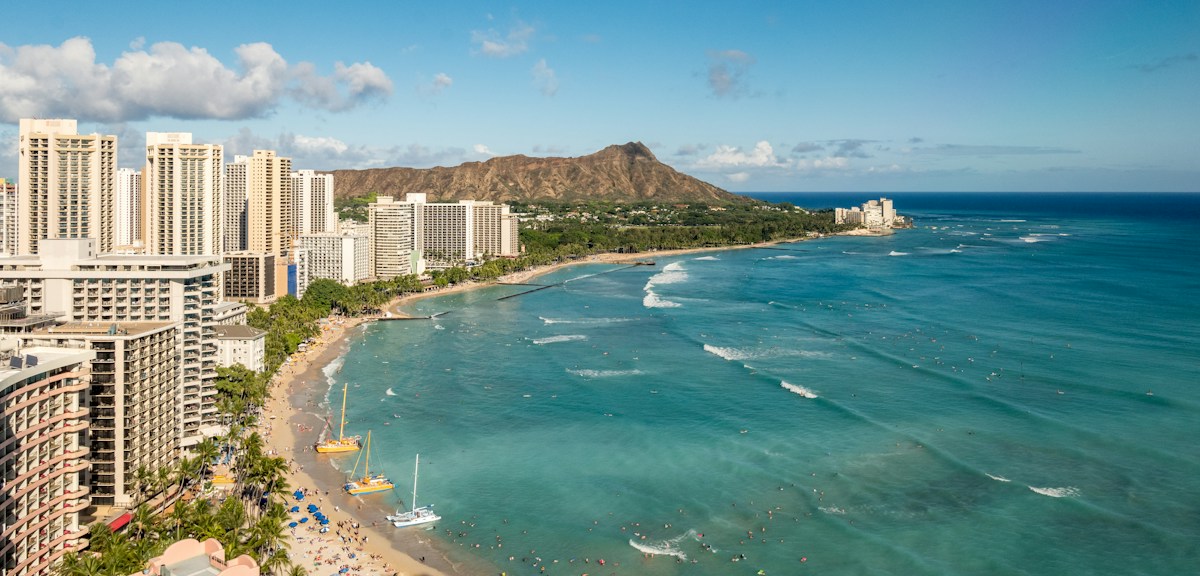
Every photo of Waikiki Beach has it in the background: that flat-topped, rust-colored ridge rising 762 feet above the Pacific. Native Hawaiians called it Lēʻahi — "brow of the tuna fish" — for the shape its ridgeline traces against the sky. British sailors in the 19th century called it Diamond Head after spotting calcite crystals on the slopes that they mistook for diamonds. The crystals turned out to be worthless. The name stuck anyway.
Diamond Head is a volcanic tuff cone — formed not by lava flows but by a single, violent steam explosion roughly 300,000 years ago, when magma rising through the earth met groundwater or seawater. The result was an eruption so fast that geologists believe the crater formed almost entirely in one brief event. The symmetry of the cone, unusual for volcanic formations, reflects how quickly and uniformly it cooled.
It has not erupted in approximately 150,000 years. It is classified as extinct. And yet it is the most recognizable natural feature on any of the Hawaiian Islands — the landmark that orients every visitor who lands at Honolulu International Airport and glances southeast.
How It Formed: A Steam Explosion, Not a Lava Flow
Most people imagine a volcano as a cone of lava. Diamond Head is something different. It is a tuff cone — built from ash, cinders, and fragments of solidified lava ejected by explosive steam. When the magma rose through the crust and hit the water table (or seawater from an ancient coastline), it vaporized instantly, shattering the rising rock into ash and hurling it upward. That ash rained down in a ring, building the circular crater you see today.
The crater is roughly 3,520 feet across and encloses about 350 acres. The rim rises highest on the southeast side — the 762-foot summit — and drops lower on the north and west. The interior of the crater is flat-floored, once used as a cattle pasture and later as a military installation.
The Name That Stuck: British Sailors and False Diamonds
In the 1820s, British sailors sailing past Oahu spotted glints from the slopes and went ashore to investigate. The glinting crystals turned out to be calcite — abundant, common, worthless. But the name "Diamond Head" they coined spread through nautical charts, military maps, and eventually every travel brochure printed in the 20th century. The Hawaiian name Lēʻahi, meaning "brow of the tuna fish" (a reference to the profile of the ridge), is still used in formal and cultural contexts.
Diamond Head was designated a National Natural Landmark in 1968. It is protected as a Hawaii State Monument and falls within the boundaries of Diamond Head State Monument.
The Military History Inside the Crater
In the early 1900s, the U.S. Army recognized what native Hawaiians had long understood: Diamond Head's elevated rim offered an unobstructed view over the entire southern coastline of Oahu. In 1908, the Army began fortifying the site. By 1910, Fire Control Station No. 8 was operational inside the crater, connected by a network of tunnels bored through the tuff.
The tunnels and bunkers you walk through on the summit hike today are original Army installations. The 225-foot tunnel near the top of the trail was hand-drilled through solid rock and opened to a battery fire control station with windows cut into the crater rim. From these windows, soldiers could track and coordinate artillery fire along the coast. The installation was active through World War II and into the 1950s.
The Army also built a lighthouse at the base of the southeast rim in 1917, still operational today as the Diamond Head Light, visible from approaching ships.
Hike tip: The summit trail is 1.6 miles round trip with 560 feet of elevation gain. Bring water, sunscreen, and a small flashlight for the tunnel. Go early — the parking lot fills by 9 a.m. most days. Sunrise hikes are spectacular and far less crowded than midday.
The Summit Trail
The Diamond Head Summit Trail is one of the most-hiked trails in Hawaii — and for good reason. The trail is well-maintained, relatively short, and rewards hikers with one of the best panoramic views on Oahu: Waikiki to the west, Koko Head to the east, the Ko'olau Mountains behind, and open Pacific in every other direction.
The trail begins in the crater interior, switchbacks up the interior slope, then passes through the original Army tunnel — a 225-foot passage with low clearance that requires a flashlight and a slight crouch. After the tunnel, two sets of stairs (about 175 steps total) and a spiral staircase lead to the summit observation deck inside the old fire control station.
Round trip is typically 1.5 to 2 hours for most hikers. The parking lot inside the crater has limited spaces; arriving early is strongly recommended. Entry requires a fee and a reservation — book through the Hawaii State Parks website before you go.
Inside the Crater: What Most Visitors Miss
Most hikers park, hike to the summit, and leave. But the interior of the crater has its own history worth pausing for. The flat crater floor was used as an Army artillery installation during World War II and later housed the Hawaii Air National Guard. The old fire control building and communication bunkers are visible from the trail. Interpretive signs along the path describe the military use in more detail.
The crater also holds Fort Ruger, the first permanent Army post in Hawaii (established 1909). Some of the original infrastructure — concrete batteries, storage buildings — remains visible from the trail. It is an unusual combination: volcanic geology, military history, and one of the best hiking views in the Pacific, all within a few miles of Waikiki.
Explore All Oahu Tours
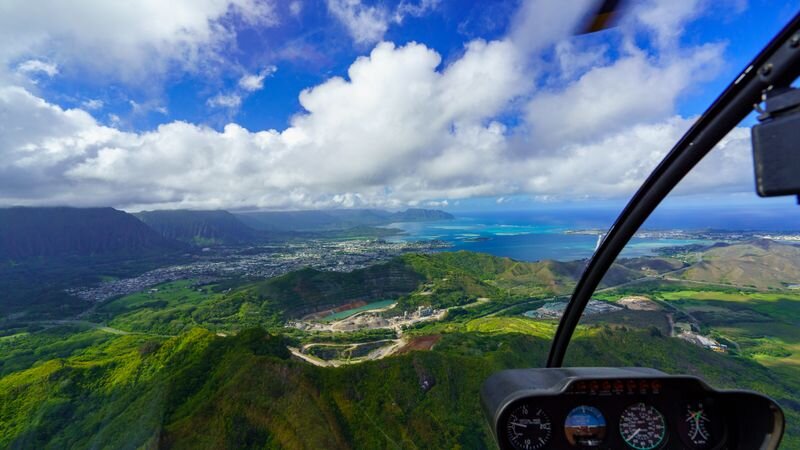
From helicopter flights over Diamond Head to snorkeling tours and Pearl Harbor visits — compare Oahu's best experiences with live availability.
Browse Oahu Tours →Frequently Asked Questions
How tall is Diamond Head?
Diamond Head stands 762 feet (232 meters) above sea level. The crater is roughly 3,500 feet across. The summit offers panoramic views of Waikiki, Honolulu, and the Pacific.
Is Diamond Head an active volcano?
No. Diamond Head is an extinct volcanic tuff cone that last erupted roughly 150,000 years ago. It formed in a brief steam explosion and has been geologically quiet ever since.
What does Lēʻahi mean?
Lēʻahi is the traditional Hawaiian name, generally translated as "brow of the tuna fish," referring to the profile of the ridgeline. "Diamond Head" came from British sailors who mistook calcite crystals on the slopes for diamonds.
How hard is the Diamond Head hike?
Moderate — 1.6 miles round trip, 560 feet of elevation gain, 175 stair steps, and one 225-foot tunnel. Most reasonably fit visitors complete it in about 1.5 to 2 hours. Start early to beat heat and crowds.