12 Things to Do on Molokai
Molokai is Hawaii without the polish. No resorts. No stoplights. No chain restaurants. Just 7,000 residents on a 38-mile island where the pace is set by the land, not the tourism board. More than 60 percent of the population is Native Hawaiian — the highest proportion of any island in the chain — and that shapes everything from the food to how visitors are expected to behave. If you come looking for a resort experience, you are on the wrong island. If you come ready to listen, slow down, and respect a place that has deliberately chosen not to develop, Molokai will show you a side of Hawaii that most visitors never see.
Mindset tip: Molokai is intentionally undeveloped. The community has fought off resort projects and cruise ship stops to preserve their way of life. There are no stoplights, no fast food chains, and no nightclubs. Come with humility, follow local guidance, and leave your rush on the plane. This is not a place that wants to be "discovered" — it is a place that has chosen to stay exactly as it is.
1. Kalaupapa National Historical Park
The most powerful experience on Molokai — and one of the most moving places in all of Hawaii. Kalaupapa is the remote peninsula where more than 8,000 people with Hansen's disease (leprosy) were forcibly exiled beginning in 1866. Isolated by the world's tallest sea cliffs on three sides and ocean on the fourth, patients were left to build their own community. Today the settlement is a national historical park. Access is by permit only, and visitors must join a guided tour. You can hike 3.5 miles down the 1,700-foot cliff trail (26 switchbacks) or ride a mule. The stories told by the guides — some of whom are descendants of patients — will stay with you long after you leave. Book well in advance; tours are limited.
2. Papohaku Beach
Three miles of white sand on Molokai's west end, Papohaku is one of the longest beaches in Hawaii — and most days you will have it nearly to yourself. The beach is wide, wild, and windswept, backed by low dunes and kiawe trees. Swimming can be dangerous when surf is up (especially in winter), but on calm days the water is swimmable near shore. Most visitors come to walk, sit, and absorb the sheer scale of the place. There are basic facilities at Papohaku Beach Park including restrooms, picnic tables, and outdoor showers. Sunsets here are spectacular, with unobstructed views toward Oahu. If you are used to crowded Waikiki, Papohaku will recalibrate your definition of a Hawaiian beach.
3. Halawa Valley Hike to Moaula Falls
At the eastern tip of Molokai, Halawa Valley was one of the earliest settlements in Hawaii, inhabited continuously for over 1,500 years. The hike to the 250-foot Moaula Falls follows a lush trail through taro terraces, guava trees, and ancient stone walls. This is not a state park trail — it crosses private land and must be done with a local guide from the Solatorio family or another authorized host. The cultural narration along the way transforms this from a nature hike into a living history lesson. You will learn about traditional taro farming, Hawaiian land management, and the valley's significance in oral tradition. The swimming pool at the base of the falls is the reward. Allow a full morning; book ahead.
4. Ancient Hawaiian Fishponds
Molokai's south shore holds the largest concentration of ancient Hawaiian fishponds in the state — more than 60 in various states of repair. These rock-walled enclosures in the shallow reef flats were sophisticated aquaculture systems, built centuries ago to raise fish for aliʻi (chiefs). The most accessible is Aliʻi Fishpond near Kaunakakai, which has been restored and is actively used to raise mullet and milkfish using traditional methods. Several community groups work on fishpond restoration as both cultural preservation and food sovereignty. Driving the south shore road, you will spot the curved rock walls extending into the water. Some can be visited on guided tours; ask at the Molokai Visitors Center in Kaunakakai for current options.
5. Kaunakakai Town
Molokai's only real town is three blocks long and feels like stepping into 1970s Hawaii. Kaunakakai has a hardware store, a handful of small restaurants, a couple of grocery stores, and the legendary Kanemitsu Bakery — famous for its hot bread served from the back door late at night. Line up after 8 PM, pick your filling (butter, cream cheese, strawberry, blueberry), and eat it in the parking lot with everyone else. During the day, grab a plate lunch from Paddlers Inn or Molokai Burger. The town wharf is a good spot for watching local fishermen and the occasional outrigger canoe. Saturday mornings bring a small farmers market. Kaunakakai is not charming in a postcard way — it is real, unpretentious, and completely itself.
6. Molokai Sea Cliffs
The north shore of Molokai is home to the tallest sea cliffs in the world, rising over 3,000 feet straight out of the Pacific. There is no road access — the only ways to see them are from the water, from the air, or from the Kalaupapa Lookout at Palaʻau State Park. Thin waterfalls streak down the green walls during rainy season, some dropping thousands of feet before hitting the ocean. Kayak tours (seasonal, advanced paddlers only) run along the base when conditions allow. For most visitors, the Kalaupapa hike or a scenic flight provides the best vantage. These cliffs appear on every "most dramatic coastlines" list for a reason — photographs do not capture the scale.
Explore More Hawaiian Islands
Discover tours and activities across Oahu, Maui, the Big Island, and Kauai with Wander Hawaii.
Browse All Tours7. Kapuaiwa Coconut Grove
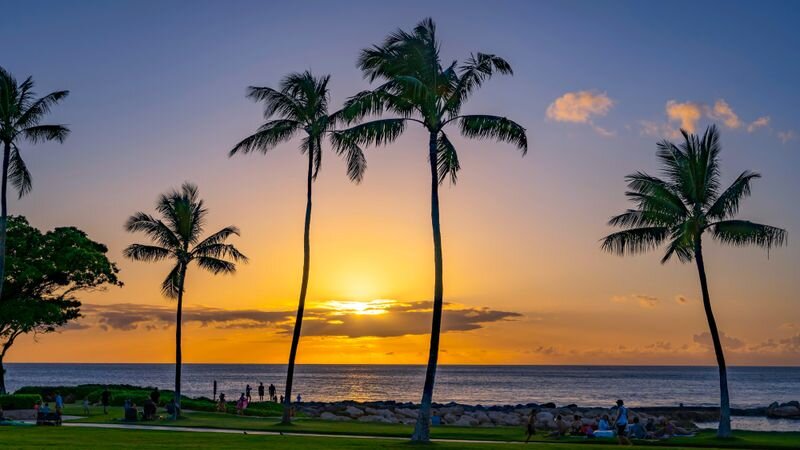
Just west of Kaunakakai, a thousand royal coconut palms stand in rows along the shoreline — planted in the 1860s for King Kamehameha V. Kapuaiwa Coconut Grove is one of the last royal groves in Hawaii and a striking sight, especially at sunset when the palms silhouette against the sky. The grove is sacred ground and culturally significant; visitors should stay on the road shoulder and not walk among the trees (falling coconuts are a real hazard, and the land is considered kapu). This is a drive-by or park-and-look stop, not a picnic spot. Combined with the sunset light over the water, it is one of the most photographed scenes on Molokai and well worth a stop on the way to or from the west end beaches.
8. Palaʻau State Park
At the end of Highway 470, Palaʻau State Park sits on the cool, forested uplands above the north coast. The main draw is the Kalaupapa Lookout — a railed viewpoint at the edge of a 1,600-foot cliff that drops straight down to the Kalaupapa peninsula. On a clear day you can see the settlement, the lighthouse, and the full sweep of the sea cliffs stretching east. A short trail through ironwood trees leads to Phallic Rock (Kaule O Nanahoa), a natural lava formation steeped in Hawaiian legend — women once visited the rock to pray for fertility. The park has picnic areas and a campground. It is free, uncrowded, and gives you the aerial perspective on Kalaupapa without the commitment of the hike down.
9. Snorkeling and Reef Exploration
Molokai's south shore holds the longest fringing reef in the United States — nearly 30 miles of shallow coral stretching along the coast. Kumimi Beach (also called Murphy's Beach) on the east end is the most popular snorkeling spot, with calm water, healthy coral, and good fish life in the nearshore shallows. Dixie Maru Beach on the west end is another option when conditions are calm. Molokai has no dive shops and no snorkel cruise operators — you bring your own gear or rent from the few vacation rentals that offer it. That lack of commercial pressure means the reef is in better shape than most in Hawaii. Water shoes help on the rocky entries. Check conditions before you go; south shore waters are generally calmest in summer.
10. East End Drive
Highway 450 runs 27 miles east from Kaunakakai to Halawa Valley, and the drive itself is one of the best things to do on Molokai. The two-lane road hugs the coast past ancient fishponds, tiny churches, and small beaches tucked between rocky headlands. Points of interest along the way include St. Joseph's Church (one of the churches built by Saint Damien), the Iliiliʻopae Heiau (one of Hawaii's largest ancient temples), and a series of roadside fishponds visible at low tide. The road narrows and gets rougher as you approach Halawa, winding through jungle with ocean views. Stop often. There is no rush, no traffic, and no reason not to pull over at every scenic bend. The east end is Molokai distilled — quiet, green, and unhurried.
11. Cultural Experiences
Molokai's identity is built on Hawaiian culture, and the island offers community-based experiences you will not find anywhere else. Hula was born on Molokai — the annual Ka Hula Piko festival (held each May) celebrates the island as the birthplace of the dance. Throughout the year, visitors can join lei-making workshops, taro-farming sessions, and lauhala-weaving classes organized by local families and cultural practitioners. These are not resort luau performances — they are small-group sessions led by people who live the traditions daily. The key is advance planning and genuine respect. Ask at the Molokai Visitors Center or your lodging host for current offerings. Supporting community-based tourism puts money directly into local hands and ensures these traditions continue.
12. Getting to Molokai
Molokai is accessible but not effortless — which is part of the point. Southern Airways Express and Mokulele Airlines fly small prop planes from Honolulu (25 minutes) and Kahului, Maui (20 minutes) multiple times daily. Flights sell out, especially on weekends, so book early. The Molokai Ferry runs seasonally between Kaunakakai and Lahaina, Maui — check current schedules as service has been intermittent. At the airport, Alamo is the primary car rental option and the only major agency on-island. Reserve well ahead; inventory is limited. There are no rideshares and essentially no taxis. A rental car is not optional. Accommodations are vacation rentals, condos, and the Hotel Molokai — there are no resorts. Plan ahead, pack patience, and arrive ready to unplug.
Plan Your Hawaii Trip
From Oahu adventures to Big Island volcanoes — find the best tours and experiences across the Hawaiian Islands.
See Hawaii ToursFrequently Asked Questions
How do you get to Molokai?
The most common way is a short flight from Honolulu or Kahului, Maui on Southern Airways Express or Mokulele Airlines. Flights take about 25 minutes from Honolulu and 20 minutes from Maui. A seasonal ferry from Maui (the Molokai Ferry) is also available when running. There is no direct service from the mainland — you connect through Honolulu or Maui.
How many days do you need on Molokai?
Three to four days is ideal. That gives you time for the Kalaupapa hike or mule ride (a full day), the Halawa Valley waterfall hike (half day), exploring Kaunakakai and the south shore fishponds, and a lazy afternoon at Papohaku Beach. Molokai rewards a slower pace — rushing defeats the point.
Is Molokai worth visiting?
Absolutely — if you want authentic Hawaii. Molokai has no resorts, no stoplights, and no chain restaurants. It is the most Hawaiian island in the chain, with a majority Native Hawaiian population and deep cultural traditions. Visitors who come expecting Waikiki will be disappointed. Visitors who come to slow down, respect the land, and experience real Hawaiian culture will find it .
Do you need a car on Molokai?
Yes. There is no public transit, no rideshare service, and no taxis to speak of. Rent a car at the Molokai airport from Alamo — it is the only major rental agency on-island. A standard car works for most roads, though the dirt road to Moʻomomi Beach and some west-end tracks benefit from a 4WD vehicle.